Words with Foxy
DonkeySoft Inc.Word
4.4160.00 Reviews
- Version
- 2.2.82
- Installs
- 50.00K
- Age Rating
- Everyone
Screenshots
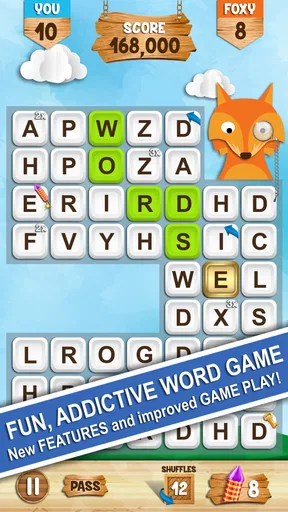
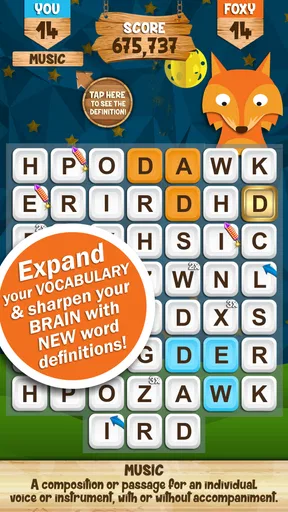
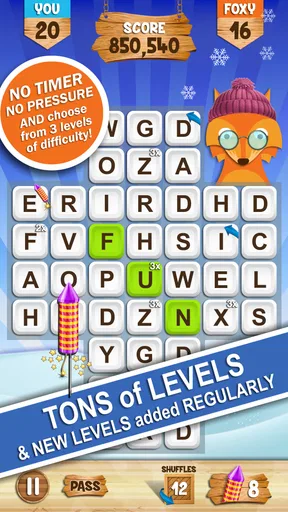
Our Review of Words with Foxy
 Analysis by Appyee
I found Words with Foxy easy to understand from the first session: it is a free word game from DonkeySoft Inc. built around a simple challenge, playing against Foxy to see how strong my word-game skills are. That narrow idea is also its appeal. I did not have to learn a complicated story, manage a large collection of characters, or work through a crowded set of systems before starting a round. I could focus on words.
After spending time with it, I see it as a good fit for people who enjoy compact mental challenges and want something more focused than a broad puzzle collection. It is listed for Everyone, runs on Android from version 7.0 onward, and has reached over 50 thousand installs. The current version is 2.2.82, so it is a mature option rather than a brand-new experiment. Its average rating of 4.4 from more than 500 ratings suggests that the basic idea works for many players, although the experience is still quite specific: this is for word-game fans, not for someone looking for an action game or a deep narrative adventure.
How the game feels to read and navigate
The strongest part of the design is its directness. The central purpose is apparent without a long explanation: I am testing my ability with words against Foxy. That matters for players who find layered menus, elaborate tutorials, or constant notifications tiring. A focused word-game format lets me spend my attention on the puzzle instead of remembering several unrelated objectives.
I also think the opponent framing gives the game a clearer rhythm than a completely open-ended word practice tool. There is a reason to begin a round and a natural sense of comparison while playing. Foxy acts as a recognizable reference point, which makes the challenge feel more personal than simply trying to beat a timer or improve an abstract score.
That simplicity can help people who are new to mobile word games. A friend who usually avoids complicated games could understand the premise quickly, and I would be comfortable recommending it as a low-pressure introduction to this category. The trade-off is that experienced players who want extensive customization may find the structure less flexible than a larger word-game platform.
For readability, the important question is not only whether letters are visible, but whether the player can keep track of the whole round without confusion. A word game places repeated demands on visual attention: reading available letters, checking a possible word, noticing the opponent's progress, and confirming an action. I found that a clean, uncluttered presentation is especially valuable here because decorative elements can compete with the actual task.
My practical advice is to play in a comfortable position rather than holding the phone at an awkward angle. Word games invite short sessions, but repeated close reading can still become tiring when the screen is small or the surrounding light is poor. A tablet may be preferable for someone who wants larger text and a more spacious layout, while a phone is more convenient for quick play. The game itself is best approached as a focused reading activity, not as something to operate casually while looking away.
A useful routine for new players
I recommend beginning with a few unhurried rounds instead of immediately treating Foxy as a test of personal ability. The first sessions are useful for learning the pace, understanding how the game expects words to be entered, and noticing whether the visual arrangement suits you. This is a small but important distinction: if a player rushes immediately, a difficulty with timing or screen handling can feel like a vocabulary problem.
Another helpful habit is to separate recognition from decision-making. I often notice a possible word quickly, then pause to check whether it is genuinely the best choice before committing. That pause makes the game more useful as a thinking exercise and reduces the frustration of acting on the first idea that appears. Players who tend to tap quickly may benefit from deliberately slowing down during their opening games.
The opponent format also makes self-comparison more meaningful when used over several sessions rather than one isolated result. A single poor round may reflect tiredness, distraction, or an unfamiliar interface. I would judge my progress by whether I become calmer and more consistent, not only by whether I win immediately.
Motor, sensory, and situational considerations
Words with Foxy is less demanding than a fast action game because its main challenge is linguistic and visual rather than reflex-based. That makes it potentially suitable for players who prefer deliberate interaction. Someone who needs time to inspect letters may find a word game more comfortable than a game built around rapid movement or split-second reactions.
Still, “slow-paced” should not be confused with effortless access. A player with limited fine-motor control may find repeated tapping difficult, especially if the interface requires accurate selection of small on-screen elements. I would test the game with the phone placed on a stable surface rather than held in one hand. That simple change can reduce accidental movement and leave the other hand free to interact more carefully.
For players with tremors or reduced precision, using a stylus could make individual selections easier, provided the device supports one comfortably. I would also avoid playing while walking, commuting in a crowded vehicle, or carrying something else. The game asks for enough concentration that divided attention can turn a manageable word challenge into a frustrating series of mistakes.
Visual fatigue is another realistic consideration. Word games involve sustained reading, so people sensitive to glare may prefer a shaded room and a screen brightness that matches the surroundings. I would not rely on maximum brightness as a cure for small text; it can increase glare and make longer sessions less comfortable. Short breaks between rounds are more useful than forcing a single extended session.
Players with color-vision differences should pay attention to whether any important state is communicated through color alone. I would judge the game by whether the wording, letter arrangement, or other visual distinctions remain understandable without depending on subtle color changes. If a particular screen feels ambiguous, increasing the device's overall text size or changing the display contrast may help, although those settings affect the whole phone rather than only the game.
For people with hearing loss, a word game is naturally less dependent on sound than many genres. That is a meaningful advantage in shared spaces or quiet environments. I could play it without needing to follow spoken instructions or audio cues as the central part of the experience. Conversely, anyone who relies heavily on audio feedback should approach it as a primarily visual activity and check whether the available presentation gives enough information without sound.
Where it fits into everyday life
A realistic use case is a short waiting period at a clinic, café, or school pickup. I could open the game, play a focused round, and stop without needing to remember a large story or maintain a complicated strategy across several hours. That makes it more practical than a long-form role-playing game when I have only a few minutes and want something mentally active.
It can also work as a shared challenge between family members. One person may enjoy vocabulary and another may prefer competition, but both can understand the basic goal quickly. I would keep the comparison friendly, especially when players have different reading speeds or levels of familiarity with word games. The game is more inclusive when the result is treated as a prompt for discussion rather than a judgment of intelligence.
On the other hand, it is not ideal for every waiting situation. If I am in a noisy place, moving through a station, or frequently interrupted, I may lose the thread of a round. A game that looks casual can still require concentrated reading. For those moments, a simpler idle activity or an audio-based option may be a better choice.
The free entry point is helpful for trying it without a purchase decision. There are in-app purchases ranging from about one and a half dollars to about twelve dollars per item, so I would treat optional spending carefully and decide in advance whether I want the basic experience only. For a parent introducing the game to a child, checking the device's purchase controls is sensible, particularly because the Everyone rating describes suitable content, not a guarantee that every purchasing situation will be frictionless.
How it compares with familiar word-game alternatives
Compared with a daily word puzzle, Words with Foxy feels more like a direct contest than a solitary ritual. A daily puzzle usually gives the player one shared challenge and a strong sense of routine. This game is a better fit when I want the opponent to be part of the experience and would rather test myself through repeated play than wait for a new daily prompt.
Compared with a crossword, it is likely to suit someone who prefers quick word decisions over clues that require broad general knowledge. Crosswords reward patience, cultural recall, and the ability to work across intersecting answers. Here, the appeal is more immediate: I can concentrate on word skill and the pressure of playing against Foxy. A crossword remains the better choice for someone who enjoys long-form deduction and filling a grid slowly.
Compared with a large multiplayer word platform, this title has a more contained personality. A big platform may offer more social interaction, more modes, or a wider range of competitive opponents. Words with Foxy is preferable when I want a recognizable built-in challenger without the social overhead of managing contacts, invitations, or ongoing matches. The limitation is that players seeking a broad community or extensive competitive variety may outgrow it.
That comparison also clarifies who should skip it. If you want a story, animated action, elaborate rewards, or a large collection of different puzzle types, this focused format may feel too narrow. If you dislike being evaluated by an opponent, even a friendly one, a solo word exercise may be more relaxing. I would also choose another option for someone whose main need is formal language learning, because a word game can exercise vocabulary without replacing a structured lesson plan.
Barriers that still affect the experience
The biggest barrier is the dependence on comfortable reading and precise touch interaction. A player can understand the rules perfectly and still struggle if letters or controls are difficult to see or select. That is why I would not describe the game as universally accessible merely because it is simple. Simplicity reduces cognitive load, but it does not automatically solve visual, motor, or sensory needs.
Another limitation is the emotional effect of competition. The Foxy framing makes the game engaging, but some players may interpret every loss as a judgment rather than a normal part of practice. I found it healthier to treat each round as information about my current approach. Someone who becomes anxious around scores may prefer a noncompetitive word app, especially during stressful periods.
Short sessions are convenient, yet they can encourage repeated attempts without enough rest. Players with headaches, visual processing difficulties, or concentration limits should set their own stopping point before beginning. I would rather finish after one comfortable round than continue until the game becomes associated with strain.
There is also a practical difference between being free to install and being entirely free of spending decisions. The initial cost is zero, which makes experimentation easy, but the optional purchase range means families should use the device's normal safeguards. I would not buy anything simply to compensate for a difficult round. First I would adjust my pace, improve my approach, and decide whether the core game already provides enough value.
Android compatibility from version 7.0 makes the game approachable for people using older devices, but the quality of the experience can still depend on the phone's screen size, touch response, and general condition. An older handset with a dim display or unreliable touch layer may create problems that are not really about word skill. Testing one short session on the intended device is the most sensible way to judge comfort.
My inclusive verdict
I recommend Words with Foxy to readers who want a straightforward word game with a clear opponent and a low barrier to starting. DonkeySoft Inc. has kept the concept focused enough that I could understand it quickly, use it during a short break, and return to it without learning a complicated system. Its Everyone content rating and free entry point make it easy to consider for shared household use, while the word-based format is less dependent on rapid action than many mobile games.
My recommendation comes with conditions. I would choose it for someone who enjoys visual reading, deliberate tapping, and friendly competition. I would not choose it as the first option for a player who needs highly configurable accessibility controls, formal educational progression, a large social community, or a wide selection of unrelated modes. In those cases, a specialized alternative may offer a better match even if this game is easier to start.
The most useful way to approach it is as a compact practice space rather than a definitive measure of intelligence. Play in good lighting, use a stable surface if tapping is tiring, take breaks, and compare your performance across several relaxed sessions. Those small adjustments make the experience more welcoming across different abilities and situations.
With a 4.4 average and more than 500 ratings, it has clearly found an audience, but the numbers matter less to me than the fit. If you want a focused word contest that is easy to pick up and simple to revisit, this is a worthwhile free download; if you need broad customization or a richer puzzle ecosystem, look elsewhere. That is an honest recommendation, and it reflects both the game's approachable design and the limits of its narrow format.
Verdict
Strengths of Words with Foxy
- Simple word puzzles are easy to learn and suitable for short play sessions.
- Helpful hints can make difficult levels less frustrating.
- The fox-themed presentation gives the game a distinctive, friendly style.
- Progressive challenges provide a steady sense of accomplishment.
- Works well for players who enjoy relaxed vocabulary games.
Limitations of Words with Foxy
- Some puzzles may feel repetitive after extended play.
- The difficulty can vary noticeably between consecutive levels.
- Players seeking competitive multiplayer features may find it limited.
- Hints may reduce the challenge for experienced word-game fans.
- Progress can feel slow if later content requires repeated play.
Other Releases by DonkeySoft Inc.
View All
Similar Picks in This Category
View All
Word Search - Word Puzzle Game
Bluetile4.8

Word Search Quest - Puzzles
Blackout Lab4.8

CodyCross: Crossword Puzzles
Fanatee, Inc.4.7

Words of Wonders: Crossword
Fugo Games4.9

Wordscapes: Word puzzle game
PeopleFun4.7

Word Search Explorer
PlaySimple Games4.9
Frequently Asked Questions
What is Words with Foxy, and how is the game played?
Words with Foxy is a word puzzle game built around creating words from available letters while progressing through themed levels and challenges. As you play, you usually need to form valid words, complete objectives, and use the board efficiently to advance. The fox-themed presentation gives the game a friendly personality, while the gradually increasing difficulty keeps the experience engaging for casual and regular players.
Is Words with Foxy free to download and play?
Words with Foxy can generally be downloaded and played without an upfront purchase, making it easy to try on a compatible Android or iOS device. However, free games may include optional in-app purchases, such as extra hints, boosters, lives, or other helpful items. Before confirming any purchase, check the store listing and the game’s payment settings, especially if children may use the device.
Does Words with Foxy require an internet connection?
The internet requirements can vary depending on the version and the feature you are using. Basic word puzzles may be available without a constant connection, but advertisements, cloud saving, updates, leaderboards, events, or other online services may require internet access. If you plan to play while traveling, open the game offline first to confirm which levels and features remain accessible.
Is Words with Foxy suitable for children and beginners?
Words with Foxy is likely to appeal to beginners because its core gameplay is simple to understand: find words, solve puzzles, and progress through levels. It can also encourage spelling, vocabulary, and pattern-recognition skills. Nevertheless, parents should review the age rating, advertising content, privacy information, and optional purchases before allowing younger children to play, since these details can differ between platforms and regions.
Are there advertisements or in-app purchases in Words with Foxy?
Words with Foxy may use advertisements or optional purchases to support its free-to-play model. Ads can appear between levels or when you request additional rewards, while purchases may provide hints, extra attempts, or other conveniences. These features are not always necessary to enjoy the main puzzles, but they can affect the pace of progression. Review the store description and disable purchasing if needed.
Play our best games!


